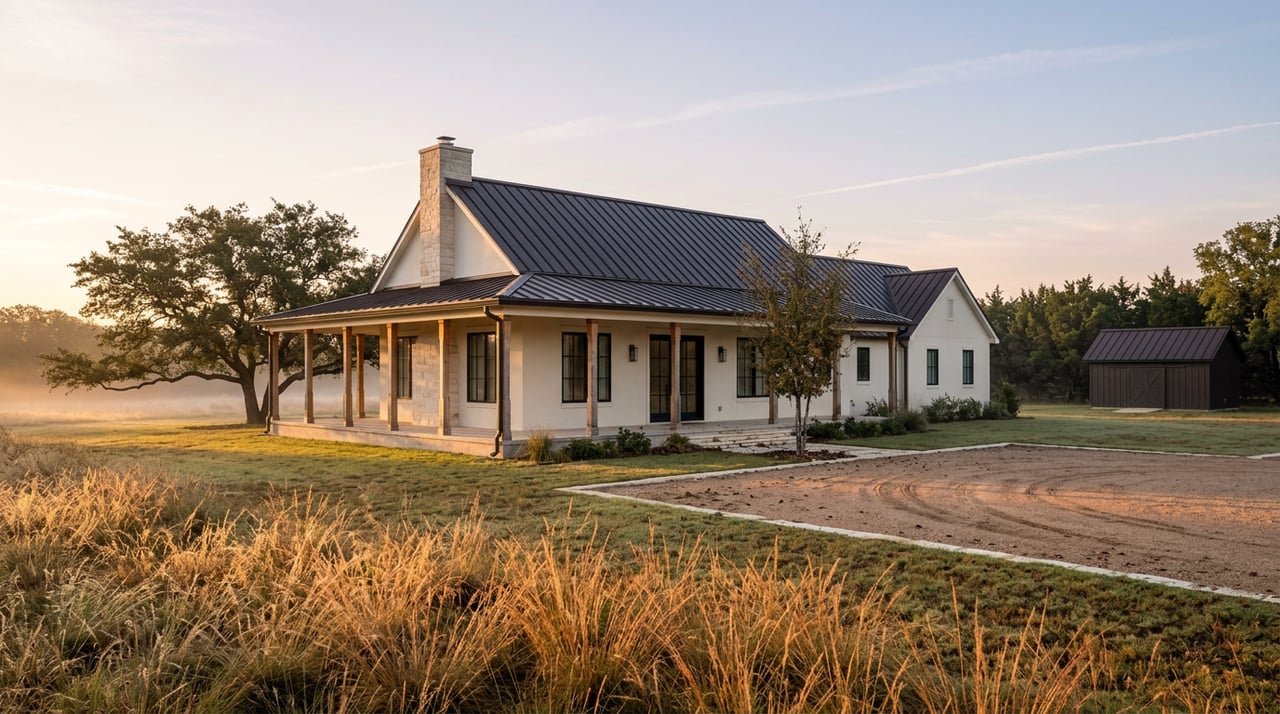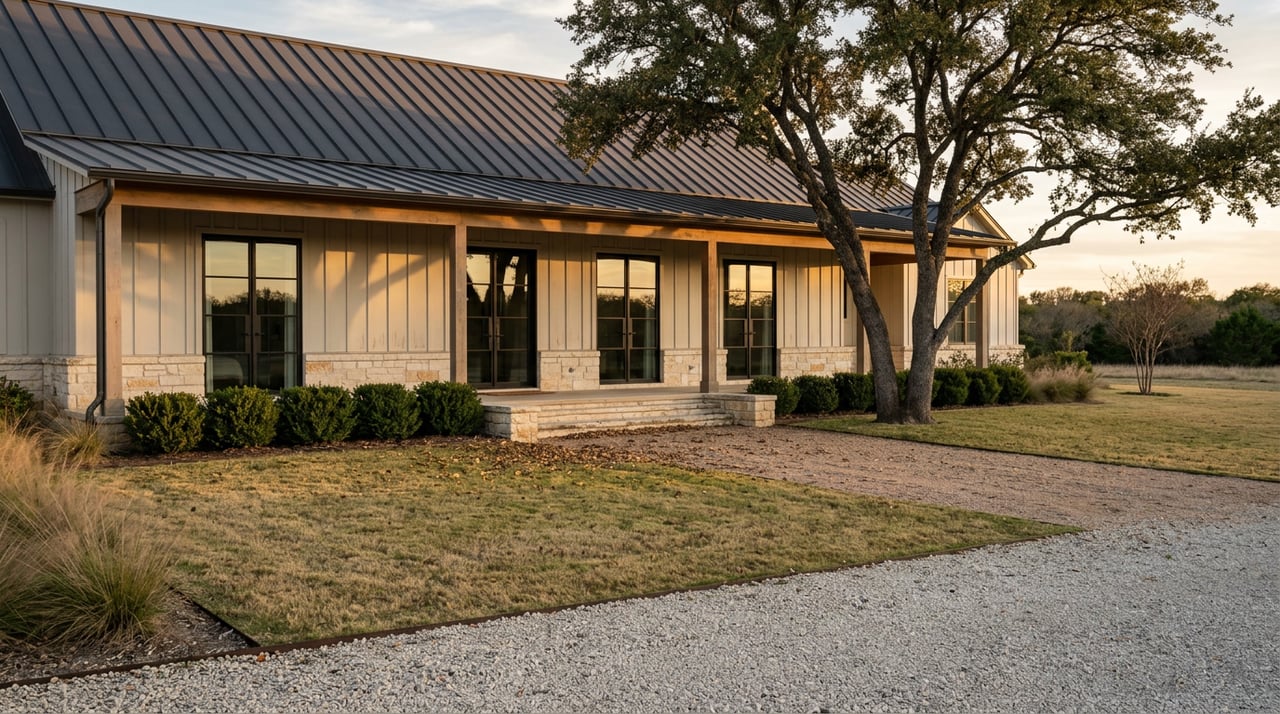
A buyer under contract on a three-bedroom brick home near Quail Creek gets the inspection report back and finds a familiar note: hairline cracks along an interior wall, a door in the hallway that sticks in July and swings free by October. The inspector isn't alarmed. Victoria sits on expansive clay soil that swells when it rains and pulls back when it doesn't, and homes built decades ago have been riding that cycle for years. The buyer isn't alarmed either, until they remember the house they toured the week before in TerraVista, new construction, same square footage, roughly $130,000 more.
That gap is not a pricing mistake. It's two different housing markets sharing one median number, and understanding which market you're actually shopping in changes how you read every listing in Victoria right now.
Two markets, one headline number
Ask three different data sources what a home costs in Victoria and you'll get three answers that all sound roughly right, because they're all measuring the same thing from slightly different angles. Over the three months ending June 2026, the median sale price in Victoria was $247,000, down about 1.2 percent from the same period a year earlier, with homes selling in about 57 days on average. Pull the number in February 2026 and it reads $247,450, with homes sitting closer to 83 days and roughly 3.7 months of supply on the market. Check March 2026 and the median climbs to $264,450 on 338 closed sales, up from 325 the year before.
None of those numbers contradict each other. They're describing the same resale market at different points in a slow, uneven year, one where price-reduced listings actually dropped from about 40.7 percent to 25.67 percent year over year, a sign that sellers who priced correctly in early 2026 weren't sitting as long as the headline days-on-market figure suggests.
Here's what none of those numbers include: new construction. Current listings across Victoria's active new-home communities run from roughly $344,900 to $431,900, with home sizes between about 1,745 and 2,608 square feet. TerraVista, the Steve Klein Custom Builder community in Victoria's Northwest sector, is currently pricing homes from $369,900 to $444,900 for 1,384 to 2,545 square feet. That's not a few thousand dollars of upgrade cost. That's a different market wearing the same city name.
What $250K actually buys, and what $400K buys instead
If your budget lands near the resale median, you're most likely shopping established, close-in neighborhoods, places like Cimarron and Quail Creek, or homes within a short drive of Victoria Mall. These are decades-old subdivisions with mature trees, settled lots, and slab or pier-and-beam foundations that have already been through years of Victoria's wet-dry clay cycle. That history isn't automatically a red flag. It's information an inspector can read, and one more reason a foundation section on an inspection report deserves a careful look rather than a quick skim.
If your budget starts closer to $370K, you're shopping TerraVista or Salem Crossing, the D.R. Horton community offering single-story plans from 2,045 to 2,608 square feet with 4 to 5 bedrooms. TerraVista sits north of Loop 463 near US 87, US 59 and US 77, zoned to Ella Schorlemmer Elementary, Cade Middle School and Victoria West High School. These homes haven't been through decades of soil movement yet. They've been through one dry season, maybe two.
Here's the comparison side by side:
| Resale (established neighborhoods) | New construction (TerraVista, Salem Crossing) | |
|---|---|---|
| Typical price, early-mid 2026 | $247K to $264K median | $345K to $445K |
| Square footage | Varies by decade of construction | 1,384 to 2,608 sq ft |
| Location | Close-in, mature lots (Cimarron, Quail Creek, near the Mall) | Northwest sector, near Loop 463 and US 87/59/77 |
| Foundation history | Multiple decades of clay-soil cycling | First one to two seasons |
| City program available | N/A | VHFC Lot-to-Home infill program (income-eligible buyers) |
The city already noticed the gap
Victoria's own leadership has been talking about this exact split in public. At the Growing Victoria Summit held March 12, 2026 at the Victoria Community Center, Mayor Duane Crocker addressed housing affordability directly during his State of the City remarks.
"Housing is not just a social issue, it's an economic necessity. Like most parts of the country, housing affordability continues to be an issue. It's a key area of concern, not just for us in the city, but for our partners, for businesses that are coming in and also for our residents."
That summit wasn't a one-off speech. It's tied to the city's broader Growing Victoria initiative, which covers retail recruitment and workforce development alongside housing, and it's the same event where the city discussed new retail arrivals like Burlington and Ulta at Victoria Village, a reminder that the housing conversation is happening alongside real, visible growth rather than in isolation.
An actual answer, not just a talking point
The most concrete response so far is the Lot-to-Home program, announced by the City of Victoria and the Victoria Housing Finance Corporation on March 31, 2026. The mechanics are specific: VHFC acquires infill lots, meaning vacant parcels inside existing neighborhoods that already have streets, sewer and water in place, then a contracted builder constructs a new single-family home on the lot within a limited profit margin. The home is sold to a pre-qualified, income-eligible buyer with a seven-year deferred forgivable loan covering the cost of the lot itself. Buyers using the accompanying CDBG assistance program can also access up to $5,000 toward closing costs and up to $5,000 toward a down payment.
In effect, the city is trying to manufacture new construction that lands closer to the resale median rather than $100,000 above it. That's a meaningful signal for the local market: if the gap between resale and new construction were closing on its own, a city-backed infill program wouldn't need to exist.
What this means if you're shopping right now
- If you're comparing a resale home near the median against new construction $100K or more above it, ask your inspector to walk you through foundation history specifically, not just flag issues generally. A home with documented, monitored slight movement is a different risk than one with no history at all.
- If your household income falls within eligibility guidelines, ask about the Lot-to-Home program before assuming new construction is out of reach. It's built specifically for buyers priced out of communities like TerraVista.
- If you're selling an established-neighborhood home near the median, don't assume days-on-market averages from early 2026 still apply. Price-reduced listings fell sharply as the year went on, which suggests correctly priced homes are moving faster than the headline DOM number implies.
- If you're choosing between neighborhoods based on price alone, factor in what that price is actually buying: decades of settled soil history in an established neighborhood, or a foundation still in its early seasons in a newer one.
A few questions worth asking before you write an offer
Does a lower resale price mean a worse foundation? Not automatically. Clay soil movement is a known, decades-long pattern across Victoria, and plenty of older homes have stable, well-maintained foundations. The point isn't to avoid resale, it's to ask specific questions during inspection rather than treating the report as a pass or fail.
Am I actually eligible for the Lot-to-Home program? Eligibility is based on gross annual household income relative to the area's median family income, with different thresholds depending on whether CDBG down payment assistance is also being used. The City of Victoria's Development Services department can walk through specifics for your household.
Will the gap between resale and new construction close? There's no data suggesting it will close on its own in the near term. The city's decision to fund an infill program rather than wait for the market to correct is itself evidence that officials see this as a structural gap, not a temporary one.
Whether you're weighing a home with thirty years of history in Quail Creek or a new build going up in TerraVista, the number on the portal is only ever half the story. The Zaplac Group works both sides of that split every week, resale and new construction, and can walk you through what a specific price actually means for the property in front of you. Contact the team when you're ready to look past the median.