15,081 people live in Jackson, where the median age is 42.1 and the average individual income is $32,146. Data provided by the U.S. Census Bureau.
Total Population
Median Age
Population Density Population Density This is the number of people per square mile in a neighborhood.
Average individual Income
Tucked into the Texas Coastal Plains about halfway between Houston and Corpus Christi, Jackson County is the kind of place that rewards people looking for room to breathe. It's rural without being remote, affordable without feeling forgotten, and anchored by a handful of tight-knit towns where Friday night football and the local school district shape the rhythm of life. This guide walks you through everything that matters when you're deciding whether to plant roots here—the geography, the history, the housing market, the schools, and the day-to-day realities of coastal-plains living.
Jackson County sits just inland from Lavaca Bay, giving it a small touch of Gulf shoreline while keeping most of its footprint firmly in farm-and-ranch country. The county seat is Edna, the largest town and the place where most local commerce, government, and medical care is concentrated.
What defines this area is its balance. You get the open space and low cost of living of true rural Texas, but you're only about 25 miles from Victoria—close enough that specialized shopping and medical care are an easy drive, far enough that home prices and traffic never resemble a metro area. The economy rests on three steady pillars: agriculture, energy, and a meaningful commuter population that lives here for the affordability and quiet while working in nearby industrial hubs.
For buyers, the takeaway is simple. Jackson County is for people who value land, community, and a slower pace, and who don't mind driving a little for the conveniences a big city takes for granted.
Geographically, Jackson County is bordered by Victoria County to the west, Wharton County to the northeast, and Matagorda County to the southeast, with a sliver of shoreline touching Lavaca Bay. The terrain is flat and agricultural, ranging from sea level to only about 155 feet of elevation.
Travel here runs along a few well-maintained corridors:
There's also a water story here. The Lavaca-Navidad River Authority manages the local rivers, which feed into Lake Texana—a 10,000-acre reservoir in the eastern half of the county that's a defining feature for recreation before the water continues toward the Gulf.
One practical note for anyone relocating: this is car country. There's no walkable urban core, so plan on driving for major errands, and expect fuel to take up a slightly larger slice of your budget than it would in a city.
Jackson County holds a genuinely outsized place in the story of Texas independence, and understanding that history helps explain the local pride you'll encounter everywhere.
Before European settlement, the region was home to the Karankawa, who lived along the river networks and coastal bays. In the 1820s the area became part of Martin De León's colony and saw an influx of Anglo-American settlers connected to Stephen F. Austin's "Old Three Hundred." In 1832, a settlement called Texana sprang up near the junction of the Navidad and Lavaca rivers and quickly became a busy port town—the county's original economic heart.
The area earned a reputation as a cradle of the Texas Revolution. In July 1835, citizens gathered at a mill in Texana and drafted the Lavaca Resolutions, one of the earliest formal protests against Mexican rule under Santa Anna and an open declaration that settlers were ready to take up arms. When the Republic of Texas was established in 1836, Jackson County was organized as one of the original counties, named for U.S. President Andrew Jackson.
Texana's decline is one of those quietly dramatic Texas stories. When the New York, Texas and Mexican Railway arrived in 1882, it bypassed Texana by a few miles, building a station that became the new town of Edna, named after the railroad builder's daughter. Recognizing the railroad was the future, residents literally packed up homes, businesses, and the local newspaper and moved to the tracks. The county seat shifted to Edna in 1883, and by the early 1900s Texana was a ghost town—its original site now largely submerged beneath Lake Texana.
Through the 20th century, the economy broadened from cattle and cotton into rice farming, and the 1930s discovery of oil and natural gas added a layer of industrial wealth that still steadies the local economy today.
Jackson County is overwhelmingly rural, with its population spread across a few small towns and unincorporated communities. Here's what distinguishes each one.
Edna is the county seat and largest city, with around 6,000 residents. Sitting right on U.S. 59, it holds most of the county's grocery stores, dining, and medical services, and it offers immediate access to Lake Texana. Edna High School—home of the Cowboys—functions as a community gathering point as much as a school.
Ganado, about 10 miles northeast of Edna on US-59, is the second-largest city with roughly 1,600 people. Its economy leans on agriculture, especially rice farming, and oilfield services. The town keeps a traditional main-street feel and rallies around its school district, the Ganado Indians.
Lolita and Vanderbilt sit in the southern half of the county along State Highway 172 and are closely linked. Vanderbilt grew up as a company town for the Magnolia Petroleum Company (later Mobil) in the 1930s, while Lolita is a smaller unincorporated community just to the north. Together they anchor the Industrial Independent School District (the Industrial Cobras), which serves as the main social hub for families in southern Jackson County.
La Ward is a tiny incorporated community southeast of Edna with under 200 residents—an agricultural crossroads surrounded by cotton fields and cattle ranches, whose families also generally feed into Industrial ISD.
If you're coming from Houston or another major Texas metro, the math here will feel like a relief. The cost of living tracks comfortably below both state and national averages, and the housing market is steady rather than volatile—no dramatic boom-and-bust swings.
Median listing prices across the county generally run between $229,000 and $269,000 depending on property type and acreage, well under the national median that sits north of $400,000. Within the towns, you'll see meaningful variation: Ganado tends to run a bit higher around $245,500, while Edna offers more affordable established homes with a median closer to $172,000.
Just as important is the pace. Homes here typically spend around 82 to 85 days on the market, which means buyers get real time to inspect, think, and negotiate without the bidding-war pressure common in metro areas.
A couple of cost realities worth planning for: Texas property taxes are high as a rule, but the lower baseline home values here usually translate to a smaller overall tax bill than you'd face in a suburban county. And because the county is rural, your transportation costs will run a little higher, since major shopping and specialized care often mean a drive to Victoria or El Campo.
Jackson County has a humid subtropical climate shaped by its proximity to the Gulf—long, steamy summers and short, mild winters.
Summers from May through September are hot and humid, with July and August highs around 94°F and overnight lows offering little relief near 75°F. Winters are short and pleasant; January, the coolest month, sees highs around 63°F and lows around 43°F, with hard freezes relatively rare. The county receives roughly 40 to 43 inches of rain a year and enjoys a long 285-day growing season, which is exactly why the land is so productive for rice, cotton, and corn.
The one environmental factor every resident should take seriously: with low elevation and a coastal location, Jackson County is genuinely vulnerable to tropical storms and hurricanes, with peak risk running June through October. Hurricane preparedness isn't optional here—it's part of the homeowning calendar.
Public education is decentralized across three localized districts, each serving as the social and athletic heart of its community.
School District | Communities Served | Approx. Enrollment | Mascot |
|---|---|---|---|
Edna ISD | Edna | ~1,500–1,600 | Cowboys / Cowgirls |
Industrial ISD | Vanderbilt, Lolita, La Ward | ~1,150 | Cobras |
Ganado ISD | Ganado | ~700 | Indians |
These districts lean into career readiness that fits the regional economy, with strong programs in Vocational Agriculture (FFA), STEM, and Health Sciences. Edna ISD partners with regional colleges to offer dual-credit courses and reports a 100% graduation rate. Rather than working in isolation, the districts pool resources through the Jackson County Special Services Co-Op in Edna, which provides specialized instruction, speech therapy, and occupational therapy across all three.
There are no four-year universities inside the county, but graduates have easy access to Victoria College and the University of Houston–Victoria, both a short drive southwest.
This isn't a county built on tourist traps, and that's the appeal. Its attractions reflect water, heritage, and classic Texas country life.
Lavaca Bluffs Vineyard & Winery sits on the scenic ridges above the Lavaca River, crafting wines from native Gulf Coast grapes like Blanc du Bois and Black Spanish—a quiet, characterful spot for a weekend tasting. For higher-energy weekends, Texana Raceway Park just outside Edna draws crowds across the coastal bend for dirt-track stock car and go-kart racing under the lights.
History buffs can track down the Texana historical markers scattered around Edna and near the Brackenridge Complex, which document the layout of the old port town and the Lavaca Resolutions. And if you visit between August and November, the single best way to understand local culture is to catch a high school football game—the Edna Cowboys, Ganado Indians, or Industrial Cobras. On Friday nights, the county effectively shuts down and shows up.
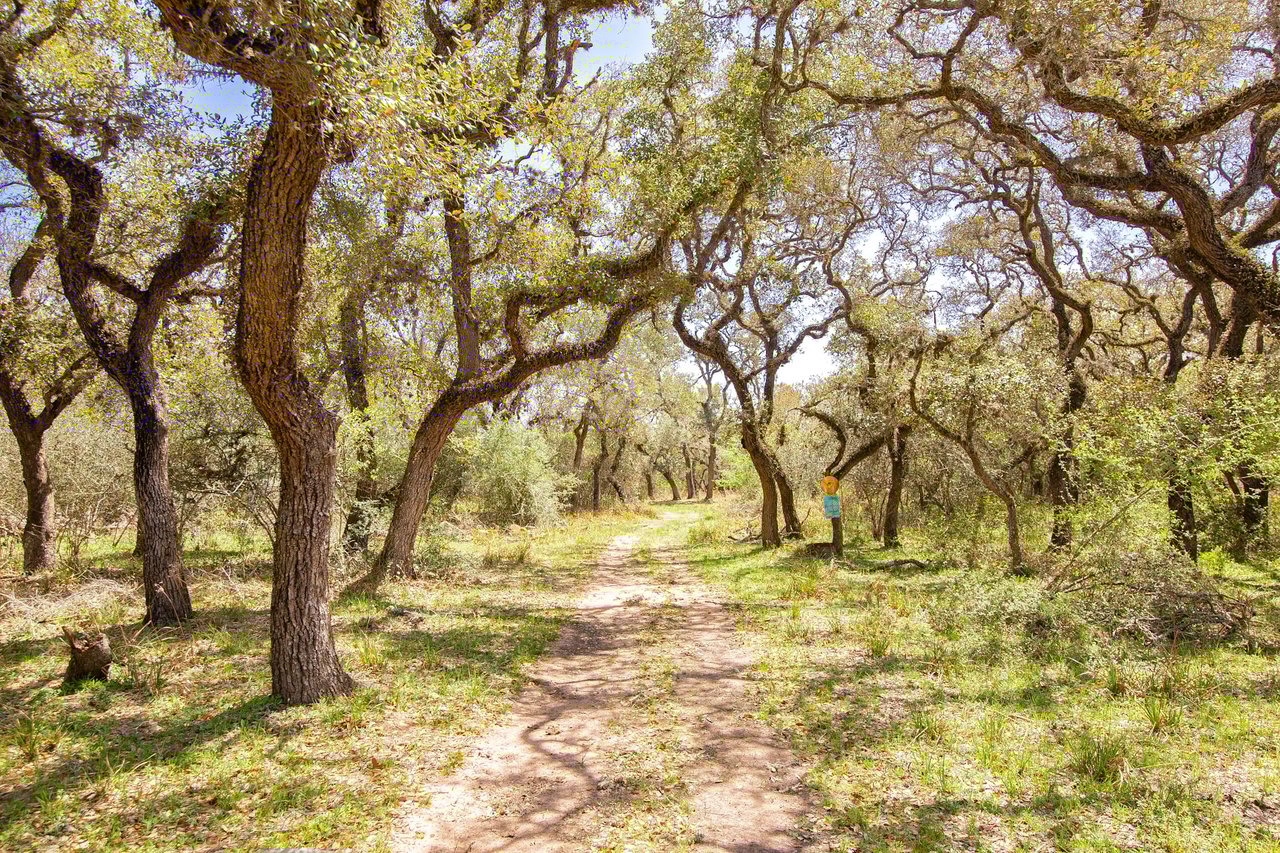
Outdoor life here orbits Lake Texana, and the centerpiece is the Brackenridge Recreation Complex, about 6.5 miles east of Edna off Highway 111. After the state handed the former Lake Texana State Park to the local river authority, it grew into the crown jewel of the county's outdoor scene. It includes Texana Park & Campground, with shaded hiking and biking trails through live oak woodlands and coastal prairie, plus quality campsites. The complex also houses the Brackenridge Main Event Center, a large covered arena hosting rodeos, livestock shows, motocross, and regional concerts.
The lake itself offers 125 miles of shoreline, paved boat ramps, kayak rentals, and lighted fishing piers—and it's well stocked for catfish, largemouth bass, and white crappie. A genuine word of caution true to the coastal-plains ecosystem: the lake and marshes are home to native alligators and venomous snakes, so keep pets leashed and mind the trail signs. For a quieter alternative, the Mustang Creek Recreation Area near Ganado offers secluded boat launches and bank fishing under mature pecan and elm trees.
Commerce here reflects small-town Texas character—local storefronts and comfort food rather than malls and chains. Edna and Ganado are the main dining spots, heavy on Tex-Mex, hickory-smoked barbecue, and casual American diners. You'll find independent community favorites like Pioneer BBQ alongside highway-corridor staples such as Whataburger and Dairy Queen for travelers on US-59. Dining out is genuinely social; it's normal to see farmers, ranchers, and families catching up over morning coffee.
For retail, downtown Edna offers charming independent boutiques carrying Western apparel, home decor, and gifts, while major grocery hauls usually mean a 25-minute drive to Victoria's large H-E-B plus! stores. A big share of local business also serves the agricultural and energy base—equipment dealerships, feed supply depots, and auto parts suppliers that keep ranches and oilfield trucks running.
The local economy is a durable mix of blue-collar industry, agriculture, and public services, leveraging both natural resources and a major transportation corridor.
Manufacturing and construction employ a large slice of the workforce in fabrication, metalwork, and regional civil projects. Agriculture remains a major engine, with the county ranking as a top regional producer of rice, cotton, corn, and grain sorghum, backed by extensive cattle ranching. The energy sector—steady since the 1930s oil boom—provides well-paying, stable jobs in drilling, pipeline maintenance, and field services. And the public sector matters enormously: Edna, Ganado, and Industrial ISDs are collectively among the most consistent employers around, alongside county government and the Lavaca-Navidad River Authority.
Because of its position on U.S. 59, the county also supports a significant commuter population—people who choose the lower cost of living and quiet here while driving a short distance to plants and medical facilities in Victoria or Wharton counties.
For a rural county, the healthcare network is surprisingly self-sufficient. The anchor is the Jackson County Hospital District (JCHD) on South Wells Street in Edna—a 25-bed Critical Access Hospital with a 24/7 emergency room, so residents don't have to leave the county for urgent care. The district also runs the Jackson County Medical Clinic for primary care, an on-site pharmacy, physical therapy, home health services, and a specialty clinic with visiting physicians, plus its own EMS mobile intensive care units covering the county's wide terrain.
Community support leans on regional partnerships and volunteers. The Food Bank of the Golden Crescent runs a mobile pantry in Edna on the last Friday of each month, RTransit provides on-demand rural rides to appointments and stores for those without reliable transportation, and the United Way of Jackson County funds youth opportunities and emergency relief. Specialized needs like the WIC program are supplemented by nearby offices in Victoria.
It comes down to what you value. If you want real affordability, large lots, a community where neighbors know each other and schools are the social center, and effortless access to Lake Texana for fishing and camping, Jackson County delivers something increasingly rare in Texas.
The trade-offs are honest ones. You'll regularly drive 25 to 45 minutes to Victoria or El Campo for major shopping, medical specialists, and varied dining. The summers are intensely hot and humid, and hurricane season is a genuine part of life here. And if you crave walkable nightlife, trendy restaurants, and constant activity, the quiet agrarian pace may feel isolating.
For the right buyer—someone who measures wealth partly in space, quiet, and community—those trade-offs are exactly the point.
If you're weighing a move to Jackson County or anywhere in the Crossroads area, it helps to work with people who genuinely know this market—not just the listings, but the land, the school districts, and the difference between a property in Edna and one out toward Vanderbilt. That's where The Zaplac Group comes in. Led by Dawn and Jimmy Zaplac, with more than three decades of combined experience across family ranches, residential homes, investment properties, and coastal real estate, the team has closed over a thousand transactions and earned VAAR's No. 1 team ranking, all while treating clients like friends rather than transactions. Whether you're buying your first home, selling acreage, or just gathering information about the area, they're happy to be a resource. You can reach The Zaplac Group at (361) 541-4100, email [email protected], or visit them at 5606 N Navarro St #101, Victoria, TX 77904. Reach out whenever you're ready to talk—no pressure, just local expertise.
There's plenty to do around Jackson, including shopping, dining, nightlife, parks, and more. Data provided by Walk Score and Yelp.
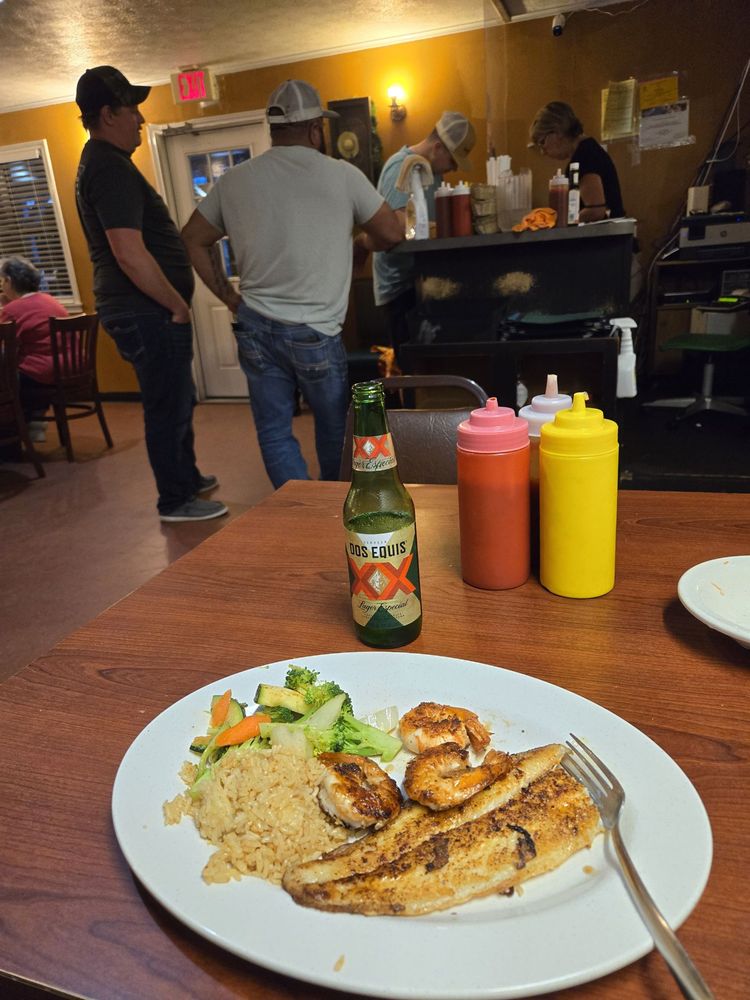
Explore popular things to do in the area, including Edna Seafood and Grill, Gary's Corner Store, and Cicada Catering.
| Name | Category | Distance | Reviews |
Ratings by
Yelp
|
|---|---|---|---|---|
| Dining | 3.51 miles | 26 reviews | 3.5/5 stars | |
| Dining | 3.72 miles | 0 reviews | 0/5 stars | |
| Dining | 3.72 miles | 4 reviews | 5/5 stars | |
| Dining · $$ | 3.75 miles | 8 reviews | 3.3/5 stars | |
| Dining | 3.75 miles | 0 reviews | 0/5 stars | |
| Dining | 4 miles | 0 reviews | 0/5 stars | |
| Dining · $ | 4.29 miles | 64 reviews | 4.5/5 stars | |
| Dining | 4.44 miles | 0 reviews | 0/5 stars | |
| Dining | 4.47 miles | 0 reviews | 0/5 stars | |
| Shopping | 4.4 miles | 0 reviews | 0/5 stars | |
| Active | 1.84 miles | 2 reviews | 5/5 stars | |
| Active | 2.47 miles | 5 reviews | 4.6/5 stars | |
| Active | 2.48 miles | 0 reviews | 0/5 stars | |
| Active | 3.67 miles | 0 reviews | 0/5 stars | |
| Active | 4.37 miles | 0 reviews | 0/5 stars | |
| Active | 4.47 miles | 1 review | 4/5 stars | |
| Active | 4.47 miles | 1 review | 4/5 stars | |
| Nightlife | 4.08 miles | 0 reviews | 0/5 stars | |
| Beauty | 3.47 miles | 0 reviews | 0/5 stars | |
| Beauty | 3.96 miles | 0 reviews | 0/5 stars | |
| Beauty | 4.44 miles | 0 reviews | 0/5 stars | |
| Beauty | 4.47 miles | 1 review | 5/5 stars | |
| Beauty | 4.47 miles | 0 reviews | 0/5 stars | |
|
|
||||
|
|
||||
|
|
||||
|
|
||||
|
|
||||
|
|
Jackson has 5,424 households, with an average household size of 2.74. Data provided by the U.S. Census Bureau. Here’s what the people living in Jackson do for work — and how long it takes them to get there. Data provided by the U.S. Census Bureau. 15,081 people call Jackson home. The population density is 18 and the largest age group is Data provided by the U.S. Census Bureau.
Total Population
Population Density Population Density This is the number of people per square mile in a neighborhood.
Median Age
Men vs Women
Population by Age Group
0-9 Years
10-17 Years
18-24 Years
25-64 Years
65-74 Years
75+ Years
Education Level
Total Households
Average Household Size
Average individual Income
Households with Children
With Children:
Without Children:
Marital Status
Blue vs White Collar Workers
Blue Collar:
White Collar: