19,853 people live in Dewitt, where the median age is 41.8 and the average individual income is $30,723. Data provided by the U.S. Census Bureau.
Total Population
Median Age
Population Density Population Density This is the number of people per square mile in a neighborhood.
Average individual Income
DeWitt County is one of those places that rewards people who slow down long enough to look at it. It sits in the Crossroads region of South-Central Texas, covering roughly 900 square miles of rolling post oak savannah, Guadalupe River bottomland, and working ranch country. Fewer than 20,000 people live here, spread across a county seat, a handful of small incorporated towns, and a scattering of unincorporated communities that have held their names for well over a century.
What buyers should understand up front is that DeWitt County runs on three overlapping economies: agriculture, energy, and the quiet, steady business of small-town Texas life. Median listing prices for single-family homes generally land between $200,000 and $230,000, which puts a well-kept three-bedroom within reach of buyers who would be priced into a townhome in San Antonio or Austin. Land is the other half of the story, and it trades on entirely different math.
This is not a commuter suburb, and it does not pretend to be. It is a place where people buy acreage they intend to keep, restore houses that were built before the county had paved roads, and send their kids to schools where the superintendent knows their names.
Geographically, DeWitt County occupies a transition zone — far enough inland to avoid the coastal humidity and hurricane exposure of the Gulf, close enough that a day trip to the bays is entirely reasonable. Cuero, the county seat, sits about 85 miles east-southeast of San Antonio and roughly 135 miles southwest of Houston. Victoria is a half-hour drive southeast, and that proximity matters more than any other distance on the list.
The county borders Victoria, Goliad, Karnes, Gonzales, and Lavaca counties. The terrain is gently rolling, with fertile bottomlands where the Guadalupe River cuts through the center of the county from northwest to southeast. That river is not incidental — it shaped where towns were founded, where the best farmland sits, and where recreational tracts still command a premium today.
For buyers, the practical translation is this: you get genuine rural quiet without genuine rural isolation. Specialized medical care, a regional airport, big-box retail, and a college campus are all within a 30-minute drive. Two major metros are within a comfortable half-day round trip.
DeWitt County was established in 1846 and named for Green DeWitt, the empresario whose colony brought some of the earliest Anglo settlers into this part of Texas. But the county's defining chapter came after the Civil War, when Texas had more cattle than buyers and the northern railheads had money.
In 1866, cattleman Thornton Chisholm led a drive out of Cardwell Flats, near present-day Cuero, north toward Missouri. That route became a feeder for what history would call the Chisholm Trail, and over the next two decades millions of Texas Longhorns would follow variations of it out of South Texas. People associate the trail with Kansas, but its southern origins run straight through this county.
Cuero itself was founded in 1873 when the Gulf, Western Texas and Pacific Railway arrived, and it became a shipping hub almost overnight. Ranchers consolidated herds here, loaded cattle directly onto railcars, or staged them for the drive north. Money and cattle in that concentration also brought conflict — the Sutton-Taylor Feud, one of the longest and deadliest range wars in Texas history, played out across this county through the 1870s, fueled by Reconstruction politics, land disputes, and rustling.
Barbed wire and expanding rail eventually closed the open range and shifted the economy toward fenced ranching and row-crop agriculture. That legacy is still legible in the property records. When you look at a large DeWitt County ranch today, you are frequently looking at land that has been in the same family since the trail-drive era — which explains why good tracts here come to market rarely and move quickly when they do.
Cuero is the civic, commercial, and cultural anchor of the county. The name comes from the Spanish word for "hide," a reference to the leather and hide trade that thrived along the Guadalupe.
The visual centerpiece is the DeWitt County Courthouse, built in 1896 in Romanesque Revival style out of dark brown sandstone and light granite. Radiating outward from it, streets like Terrell and Live Oak carry some of the best-preserved Victorian residential architecture in this part of Texas — Queen Anne homes, Greek Revival details, deep porches, and mature live oaks that were planted when the houses were new. Downtown's commercial district is listed on the National Register of Historic Places and still functions as a working main street, with local businesses, antique shops, and the Chisholm Trail Heritage Museum occupying late-19th and early-20th-century storefronts.
Cuero's other claim to national attention came in the early 20th century, when it became a major turkey processing center and launched the Turkey Trot — a spectacle in which thousands of live turkeys were driven down the middle of downtown.
From a real estate standpoint, Cuero offers the county's widest range of inventory: restored historic homes, mid-century brick ranchers, modest starter properties, and infill new construction. It is where most first-time buyers and relocating families start their search, and where resale demand is most reliable.
The outlying communities reflect the German, Polish, and Czech immigration waves that settled this region in the mid-to-late 1800s, and each has a distinct character worth understanding before you choose where to look.
Yorktown is the county's second-largest city, founded in 1848 by John York and one of the oldest settlements in the area. It began as a trading post on the Indianola Trail and retains strong German-Polish heritage, a well-regarded historical museum, and an annual Western Days festival that draws the whole county. Housing here skews toward affordable single-family homes and small acreage on the edges of town.
Nordheim was platted in 1895 along the San Antonio and Aransas Pass Railway and settled heavily by German immigrants. It remains a small agricultural community with a history in grain farming and cotton ginning, and it still has its historic Schuetzen Verein shooting club. Inventory is thin and mostly local.
Westhoff, in the northern part of the county and originally named Alois, grew up around railway cattle shipping starting in 1906. Today it functions as a rural ranching community anchored by historic churches and surrounding farmland — a common landing spot for buyers who want acreage with easy access toward Gonzales and I-10.
Beyond the incorporated towns, unincorporated communities like Meyersville, Hochheim, and Pearfield preserve pioneer history through historic dance halls, century-old churches, and family landholdings along the river basin. These are places where properties often trade privately, by word of mouth, before they ever hit the MLS.
Yoakum is a genuine quirk of Texas geography, and it is one of the more common sources of confusion for out-of-area buyers.
The city straddles the DeWitt–Lavaca county line, with its municipal boundary running directly along it. That means two homes on the same street can fall under different county appraisal districts, carry different property tax rates, and pull different county services. If you are buying in Yoakum, verifying which side of the line a property sits on is not a formality — it has real financial consequences, and it is one of the first things I check on any Yoakum listing.
The town was founded in 1887 as a rail hub on the San Antonio and Aransas Pass Railroad and grew into a manufacturing center. Tanning and leathercraft operations like Tex-Tan made it nationally known for hand-tooled saddles, belts, and boots, earning it the title "Leather Capital of the Southwest." It was also once billed as the Tomato Capital of South Central Texas, a nod to its mid-century produce trade. Both traditions are celebrated at the annual Tom Tom Festival, held every summer since 1928.
Yoakum has a deeper stock of historic homes than its size suggests, along with a solid supply of modest, well-built mid-century houses.
The residential market here is calm, and that is a feature rather than a flaw.
Median listing prices for single-family homes generally run between $200,000 and $230,000. Starter homes and fixer-uppers in Cuero, Yoakum, and Yorktown can start well under $150,000, particularly older bungalows that need cosmetic work. On the other end, acreage homes, equestrian estates, and working cattle ranches routinely run from $400,000 into seven figures depending on land quality, water access, and livestock infrastructure.
Days on market are longer here than in fast-moving suburban markets, and buyers should not read that as a sign of weakness. It reflects a smaller buyer pool and a seller base that is generally not under pressure. Sellers here can wait. That changes negotiation dynamics — lowball offers rarely land, but well-structured offers on properties that have sat for a while often do.
Demand comes from three directions: local families moving up or down within the county, workers tied to agriculture and the energy sector, and retirees or out-of-area buyers drawn by low property taxes and rural pace. That third group has grown noticeably in recent years, and it tends to compete hardest for the same thing — improved acreage within 20 minutes of Cuero.
The practical advice I give buyers: get financing sorted before you look, because when the right property does surface here, it is often the only one of its kind on the market that season.
Nearly every residential purchase in DeWitt County falls into one of three categories, and each carries its own diligence checklist.
Historic homes cluster near the centers of Cuero and Yoakum. These range from grand Victorian, Queen Anne, and Greek Revival estates built during the cattle boom to solid mid-century brick bungalows. Buyers come for the craftsmanship, the millwork, the ceiling heights, and the mature trees. What they need to plan for is the reality of older systems — original wiring, pier-and-beam foundations, plumbing of uncertain vintage — and the cost curve of doing restoration correctly. A good inspector who understands historic construction is worth every dollar here.
New construction and modern builds exist, though not in the master-planned form buyers from larger markets expect. What you find instead are custom single-family homes on infill lots inside town limits and barndominiums on rural parcels. The appeal is straightforward: energy efficiency, modern layouts, and no deferred maintenance. On rural builds, the questions worth asking early are about well depth, septic permitting, and whether utility service to the site is already established or still theoretical.
Acreage properties — small-to-medium tracts from about five to fifty-plus acres — serve ranchettes, country homesites, and weekend places. Most rely on private water wells and septic systems, and many carry agricultural exemptions that meaningfully lower the annual tax bill. That exemption is one of the most misunderstood items in a rural transaction. It does not automatically transfer intact under all circumstances, and losing it can swing a property's carrying cost substantially. It should be verified in writing before closing, not assumed.
Unimproved and working land makes up the overwhelming majority of the county's total acreage. Prices generally run in the range of $12,000 to $17,000-plus per acre, but that number varies more than almost any other figure in this guide. Tract size, paved road frontage, water features, existing improvements, and whether minerals convey can move a valuation dramatically.
Working cattle ranches here are typically a mix of improved pasture — Bermuda and Kleingrass — and brush suited for grazing. Value concentrates in the infrastructure: cross-fencing, working pens, functioning water wells, barns, and an established ag exemption. A ranch with those things in place is worth considerably more per acre than raw land of equal quality, because replacing them is expensive and slow.
Farmland sits mostly in the Guadalupe bottomlands and the flat prairie tracts, producing hay, grain sorghum, and corn. Here the drivers are soil classification, topography, irrigation access, and documented yield history.
Recreational and hunting tracts are the fastest-appreciating segment, driven by buyers from Houston, Austin, and San Antonio. These are wooded parcels with live oak, post oak, mesquite, and heavy native brush, supporting whitetail deer, feral hogs, dove, and turkey. Water is the multiplier — frontage on the Guadalupe or Sandies Creek, or well-built stock tanks, separates a good hunting tract from an ordinary one.
Across all three classes, the single most important question is access. Deeded, recorded access is not the same as a neighbor's handshake about a gate, and I have seen that distinction derail otherwise sound purchases.
DeWitt County sits directly over one of the most productive stretches of the Eagle Ford Shale, and the boom that began around 2008 reshaped this county's economy, tax base, and real estate market. Any serious conversation about property here has to include it.
In Texas, land ownership is split between the surface estate and the mineral estate, and the two can be owned by entirely different parties. Owners who hold minerals in producing areas can collect meaningful royalty income. Owners who hold only the surface still interact with energy operations regularly — through surface use agreements, pipeline easements, and right-of-way payments that generate one-time or recurring income for well pads and access roads.
This is the area where I see out-of-state buyers make the most costly assumptions. A listing that mentions acreage says nothing about whether minerals convey, whether they are leased, whether a producing well already sits on the property, or what a prior owner may have severed decades ago. A title company can run the mineral chain, but you have to ask for it, and you should ask before you are under contract.
The upside of the shale is visible countywide: energy revenue has funded road improvements, public facility expansion, and modern school campuses that a county this size would not otherwise afford. The tradeoffs are real too — heavy truck traffic on rural roads, and a rental market that expands and contracts with drilling cycles. Investors buying rental property here should underwrite conservatively rather than assume boom-cycle occupancy holds.
Public education is delivered by six independent school districts, which is a lot for a county of this population and speaks to how strongly these communities hold onto their local campuses.
District | Approx. Enrollment | Character |
|---|---|---|
Cuero ISD | ~1,900 | Largest district in the county; modern academic and athletic facilities funded in part by energy revenue, strong CTE programs, competitive athletics |
Yoakum ISD | ~1,450 | Serves students on both sides of the DeWitt/Lavaca line; dual-credit offerings and strong FFA and agricultural programs |
Yorktown ISD | ~570 | Close-knit K–12 district; small class sizes and heavy community involvement |
Meyersville, Westhoff, Nordheim ISDs | Under 200 each | Small rural PK–8 campuses with very high teacher-to-student ratios; students transition to larger area high schools |
Because district lines here do not follow city limits neatly, two properties a mile apart can feed different schools. For families, this is worth mapping before narrowing a search area rather than after.
Beyond K–12, Victoria College operates a dedicated Cuero campus, and Texas A&M University–Victoria is a short drive away, giving students both dual-credit and four-year options without relocating.
Daily life here runs on independent business. There is no lifestyle center, and commerce concentrates in historic downtown cores rather than strip retail.
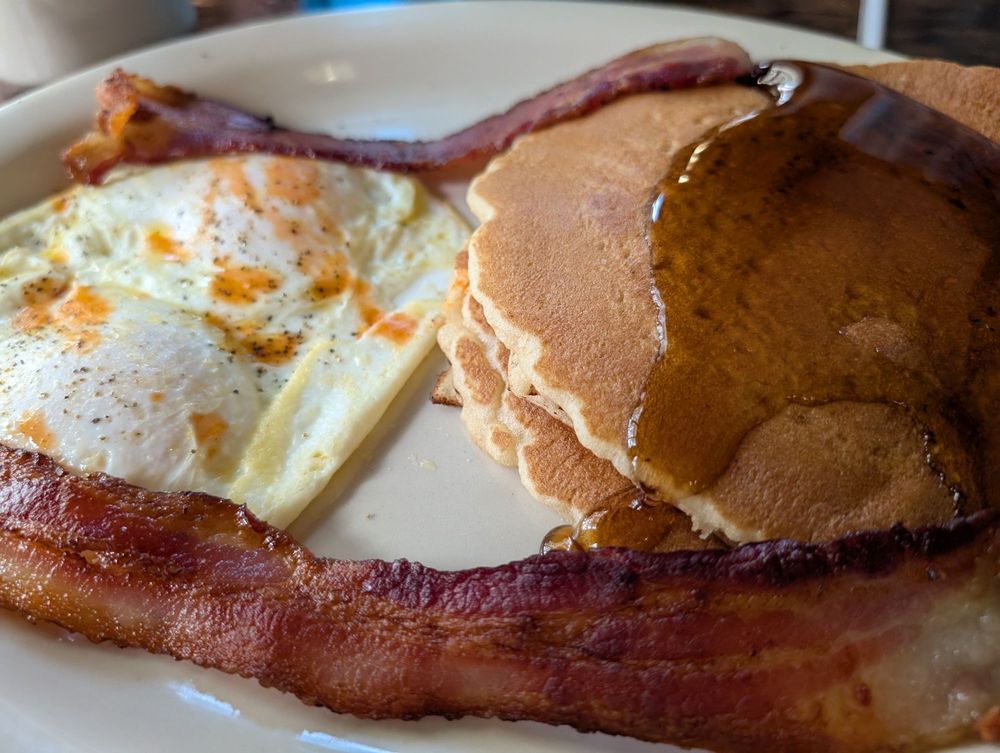
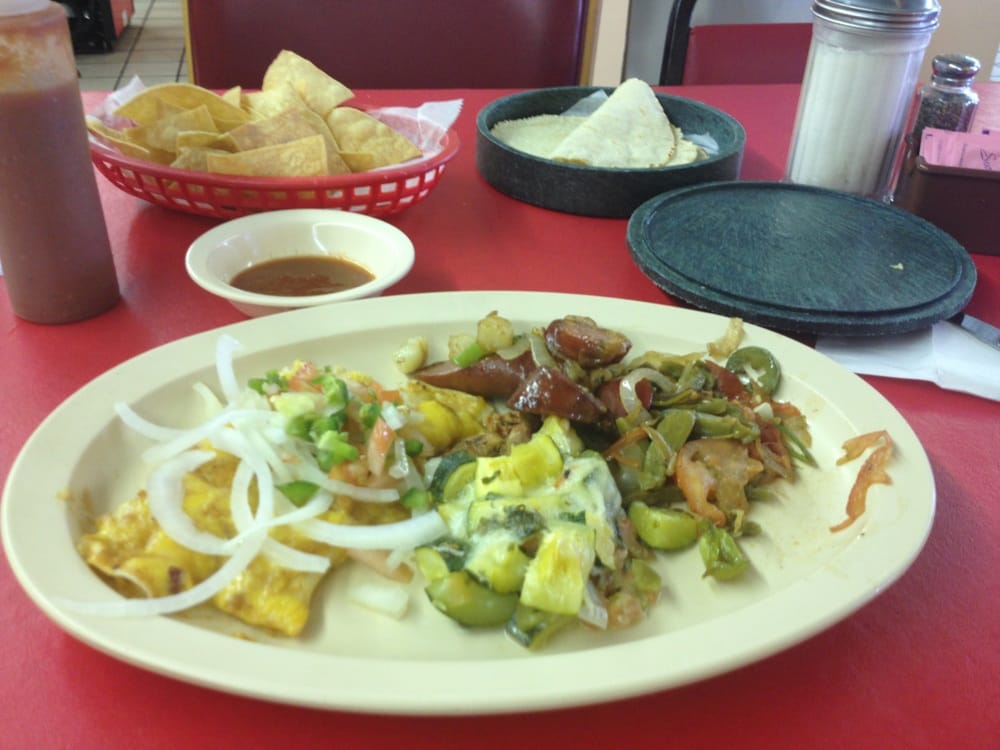
The food leans into classic South Texas: Tex-Mex taquerias, pit barbecue, and country bakeries. The Cuero Pecan House is the local institution, known for fresh-roasted pecans and homemade pies, and places like Aimee's Bluebird Cafe and the long-running Tex-Mex spots along Esplanade Street round out the rotation. These are the restaurants people actually eat at on weeknights, not tourist stops.
Retail means independent hardware stores, farm and feed supply, Western wear outfitters, and specialty gift shops in Cuero, Yoakum, and Yorktown. For a full grocery run at H-E-B, specialized medical care, or department-store shopping, most residents make the 30-minute drive to Victoria. Some head west toward San Antonio for larger needs.
I am direct with relocating buyers about this: if convenience shopping is a daily requirement for your household, factor that drive into your decision honestly. Most people who move here find it a fair trade within a few months. A few do not.
For a rural county, the social calendar here is surprisingly full, and it revolves around traditions that have run for generations.
Cuero Turkeyfest happens every October and honors the town's turkey-processing history. Its centerpiece is the Great Gobbler Gallop, a live turkey race between Cuero's bird, Ruby Begonia, and a challenger from Worthington, Minnesota, named Paycheck, competing for the title of World's Fastest Turkey. It comes with a parade, live music, and barbecue cook-offs, and it fills the town.
The Guadalupe River is the county's recreational spine — catfish and bass fishing, kayaking, canoeing, and weekend river camping. River frontage is one of the most durable value drivers in local land pricing for exactly this reason.
Cuero City Park spans more than 200 acres with walking trails, sports fields, a golf course, and a lake. From Thanksgiving through New Year's it hosts Cuero Christmas in the Park, a large drive-through light display that pulls visitors from across South Texas.
Hunting season shapes autumn here more than any other event. Dove and whitetail seasons across private ranches drive a meaningful share of local social life and seasonal tourism, and they are a primary reason buyers from the metros purchase recreational tracts in this county.
DeWitt County suits a specific buyer well, and it is worth being honest about who that is.
It fits people who want land and intend to use it — for cattle, for hunting, for a homesite with room around it. It fits families who value small schools where a child is not one of six hundred in a graduating class. It fits retirees looking for low carrying costs and a slower rhythm within reach of real medical care. It fits buyers who want a historic home with genuine architectural substance at a price that would buy a condo elsewhere in Texas. And it fits investors who understand the energy cycle and underwrite for it rather than around it.
It is a harder fit if you need daily access to a wide range of restaurants and retail, if you want a large, fast-moving inventory to choose from, or if you are counting on rapid short-term appreciation. Values here are steady rather than explosive, and the inventory is limited by design — much of this land does not turn over often.
The recurring theme in every section of this guide is that the details do the work: which side of the Yoakum line a house sits on, whether an ag exemption survives the sale, whether minerals convey, whether access is deeded. Those are the things that determine whether a purchase here works out, and they are not visible from a listing photo.
If you are considering a move to DeWitt County — or thinking about selling property here — we would be glad to help you work through it. The Zaplac Group has been serving the Crossroads Area of Texas for over three decades of combined experience, handling everything from tenured family ranches to residential homes, commercial property, and land. Dawn and Jimmy Zaplac built the team around a simple idea: treat every client like a friend, not a transaction. That approach has produced more than $320 million in sales volume since 2019, over 1,000 completed transactions, and the No. 1 team ranking with VAAR.
Whether you are buying your first home in Cuero, evaluating a hunting tract along the Guadalupe, sorting out mineral questions on a family ranch, or preparing to list a property you have owned for decades, we can walk you through what to expect and what to verify before you commit. Reach out at [email protected] or call 361-541-4100, and we will get you pointed in the right direction — even if it turns out DeWitt County is not the place for you.
There's plenty to do around Dewitt, including shopping, dining, nightlife, parks, and more. Data provided by Walk Score and Yelp.
Explore popular things to do in the area, including Corner Store, Circle K, and Tilley's BBQ.
| Name | Category | Distance | Reviews |
Ratings by
Yelp
|
|---|---|---|---|---|
| Dining | 0.06 miles | 0 reviews | 0/5 stars | |
| Dining | 0.07 miles | 0 reviews | 0/5 stars | |
| Dining | 2.44 miles | 1 review | 5/5 stars | |
| Dining | 2.61 miles | 1 review | 5/5 stars | |
| Dining | 3.56 miles | 9 reviews | 4.4/5 stars | |
| Dining | 3.6 miles | 0 reviews | 0/5 stars | |
| Dining | 3.62 miles | 32 reviews | 3.7/5 stars | |
| Dining · $$ | 3.68 miles | 15 reviews | 2.2/5 stars | |
| Dining | 3.78 miles | 34 reviews | 4.2/5 stars | |
| Dining · $$ | 3.8 miles | 26 reviews | 3.4/5 stars | |
| Dining · $ | 3.85 miles | 41 reviews | 4/5 stars | |
| Dining · $ | 3.88 miles | 6 reviews | 4.8/5 stars | |
| Dining · $ | 3.89 miles | 27 reviews | 4.3/5 stars | |
| Dining | 3.9 miles | 3 reviews | 3.7/5 stars | |
| Dining · $ | 3.91 miles | 11 reviews | 4.6/5 stars | |
| Dining | 3.92 miles | 0 reviews | 0/5 stars | |
| Dining | 3.93 miles | 0 reviews | 0/5 stars | |
| Dining | 3.95 miles | 15 reviews | 4.7/5 stars | |
| Shopping | 3.93 miles | 0 reviews | 0/5 stars | |
| Shopping | 3.95 miles | 0 reviews | 0/5 stars | |
| Beauty | 3.73 miles | 1 review | 5/5 stars | |
| Beauty | 3.75 miles | 0 reviews | 0/5 stars | |
| Beauty | 3.75 miles | 0 reviews | 0/5 stars | |
| Beauty | 3.75 miles | 0 reviews | 0/5 stars | |
|
|
||||
|
|
||||
|
|
||||
|
|
||||
|
|
||||
|
|
Dewitt has 6,683 households, with an average household size of 2.69. Data provided by the U.S. Census Bureau. Here’s what the people living in Dewitt do for work — and how long it takes them to get there. Data provided by the U.S. Census Bureau. 19,853 people call Dewitt home. The population density is 22 and the largest age group is Data provided by the U.S. Census Bureau.
Total Population
Population Density Population Density This is the number of people per square mile in a neighborhood.
Median Age
Men vs Women
Population by Age Group
0-9 Years
10-17 Years
18-24 Years
25-64 Years
65-74 Years
75+ Years
Education Level
Total Households
Average Household Size
Average individual Income
Households with Children
With Children:
Without Children:
Marital Status
Blue vs White Collar Workers
Blue Collar:
White Collar: