1,551 people live in Goliad, where the median age is 39.4 and the average individual income is $24,799. Data provided by the U.S. Census Bureau.
Total Population
Median Age
Population Density Population Density This is the number of people per square mile in a neighborhood.
Average individual Income
A Texan gem steeped in history and harmony
Goliad is unlike any other small town in Texas. It carries the full weight of the state's origin story — two of the most pivotal events in Texas history unfolded here, and the town hasn't let the world forget it. Walking through the Historic Courthouse Square feels less like browsing a commercial district and more like stepping into a living archive, where 19th-century storefronts frame a limestone courthouse that has anchored community life since 1894.
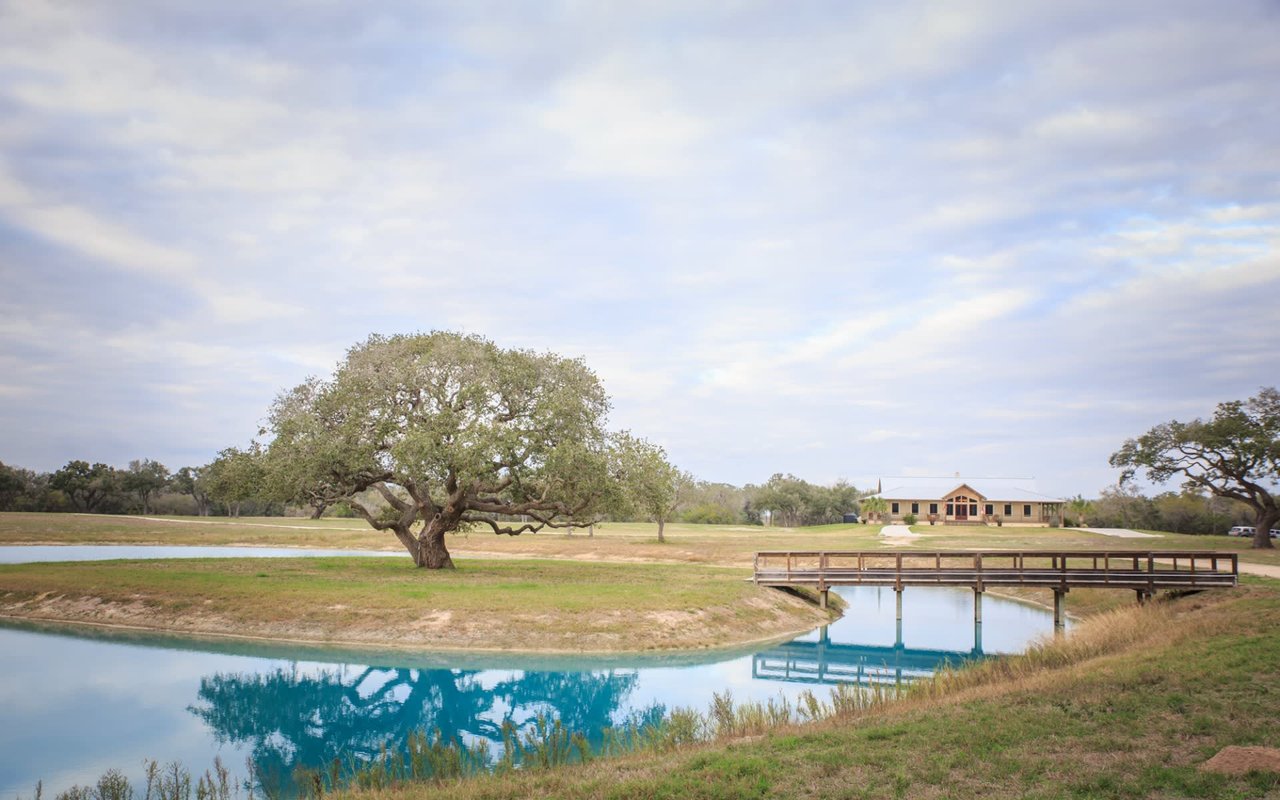
But Goliad isn't a museum piece. It's a functioning agricultural community where ranching families have worked the same land for generations, where the social calendar revolves around rodeos, market days, and Friday night football, and where the pace of life is something residents guard as fiercely as the buildings they preserve. The San Antonio River winds through the edges of town beneath ancient live oaks and pecans, feeding a quiet outdoor culture built around paddling, fishing, and hiking.
It's a town that attracts retirees craving peace, San Antonio weekenders seeking acreage, and history enthusiasts who want more than a roadside marker. If you're looking for a place with chain restaurants, big-box shopping, and a rush-hour commute, Goliad will disappoint you. If you're looking for something that feels irreplaceable, it's one of a kind.
Goliad's origins trace back to 1749, when Spanish colonial authorities relocated Mission Espíritu Santo and Presidio La Bahía to the banks of the San Antonio River. A civilian settlement called La Bahía grew in the shadow of the fort's limestone walls, and the area became the administrative and military heart of the region's colonial frontier. In 1829, the settlement was renamed Goliad — an anagram of "Hidalgo," honoring Mexican revolutionary priest Miguel Hidalgo — cementing its identity as a place shaped by political conviction.
The town's most defining moment came in March 1836, when Colonel James Fannin and more than 340 Texian prisoners were executed by Mexican forces following the Battle of Coleto. The Goliad Massacre, alongside the fall of the Alamo, ignited the rallying cry that carried the Texas Revolution to its conclusion. That single event gave Goliad a gravity that most towns never acquire.
Equally significant, though less celebrated nationally, is Goliad's role in the birth of Texas ranching. The Spanish missions here managed herds of over 40,000 longhorns — the earliest large-scale cattle operations in what would become Texas. That ranching infrastructure laid the groundwork for the cattle drives, cowboy culture, and land traditions that define the Texas identity today. Goliad earned the designation "Birthplace of Texas Ranching" not as marketing, but as historical record.
By the late 1800s, the town developed a prosperous Victorian-era commercial district anchored by the Alfred Giles-designed courthouse, and in 1984 it became the smallest town in Texas accepted into the Texas Main Street Program, a recognition of its commitment to heritage preservation over development at any cost.
Goliad sits in the Coastal Bend region of South Texas, roughly 90 miles southeast of San Antonio and 25 miles southwest of Victoria. It occupies a natural crossroads at the intersection of U.S. Highways 59, 183, and 77A — a position that made it strategically important to Spanish colonizers and continues to make it surprisingly accessible for a town of its size.
The surrounding landscape belongs to the Coastal Plain and Post Oak Savannah belt — a terrain of gently rolling prairies, scattered hardwood motts, and the lush river bottom carved by the San Antonio River. Elevations range from about 100 to 250 feet above sea level, and the soils — classified as the Goliad Series — are moderately deep, well-drained loamy soils over sandstone that historically supported both cotton farming and vast open-range grazing.
The climate is Humid Subtropical. Summers are long and demanding, with August highs regularly reaching 95–96°F. Winters are short and mild, with January lows around 46°F and only occasional freezes. Annual rainfall runs 33–37 inches, peaking in late spring and early fall. For those coming from South Texas or the Hill Country, the climate will feel familiar. For those relocating from northern states, it requires acclimatization.
Goliad operates as a stable, niche real estate market — insulated from the volatility that has rattled larger Texas metros but also constrained by low inventory and a small buyer pool. As of early 2026, median list prices typically range between $320,000 and $385,000, though that figure shifts considerably depending on acreage. Standard residential properties in town average closer to $244,000, with modest year-over-year appreciation of 1.3–2.2%.
Active inventory usually holds between 30 and 55 listings at any given time, which sounds tight until you realize how few transactions actually close annually. Homes spend an average of 110–125 days on market — a longer timeline than most Texas markets — because ranch estates and historic properties require the right buyer, not just any buyer. That patience cuts both ways: sellers must price precisely, and buyers gain more leverage than they would in a suburban Dallas or Austin zip code.
The market currently leans slightly toward buyers. Sales regularly close around 6% below list price, and seller concessions for closing costs or rate buy-downs have become increasingly common. For buyers with flexibility on timing, that negotiating room is a genuine advantage.
The most sought-after properties in Goliad are ranch and acreage estates, typically ranging from 5 to 50-plus acres. These range from custom limestone ranch houses built to reflect the region's colonial heritage to modern barndominiums — metal-framed structures with fully finished luxury interiors that have become increasingly popular with buyers who want space and style without sacrificing durability. Many of these properties carry agricultural exemptions for livestock or wildlife management, which can significantly reduce the property tax burden.
Within the historic core, particularly near the Courthouse Square, you'll find late-19th and early-20th century single-family homes in Victorian, Queen Anne, and Craftsman styles. Many retain original longleaf pine floors, high ceilings, and architectural details that simply cannot be replicated in new construction. These properties sit inside or adjacent to the local Historic District, which means their character is protected — and so is yours as a neighbor.
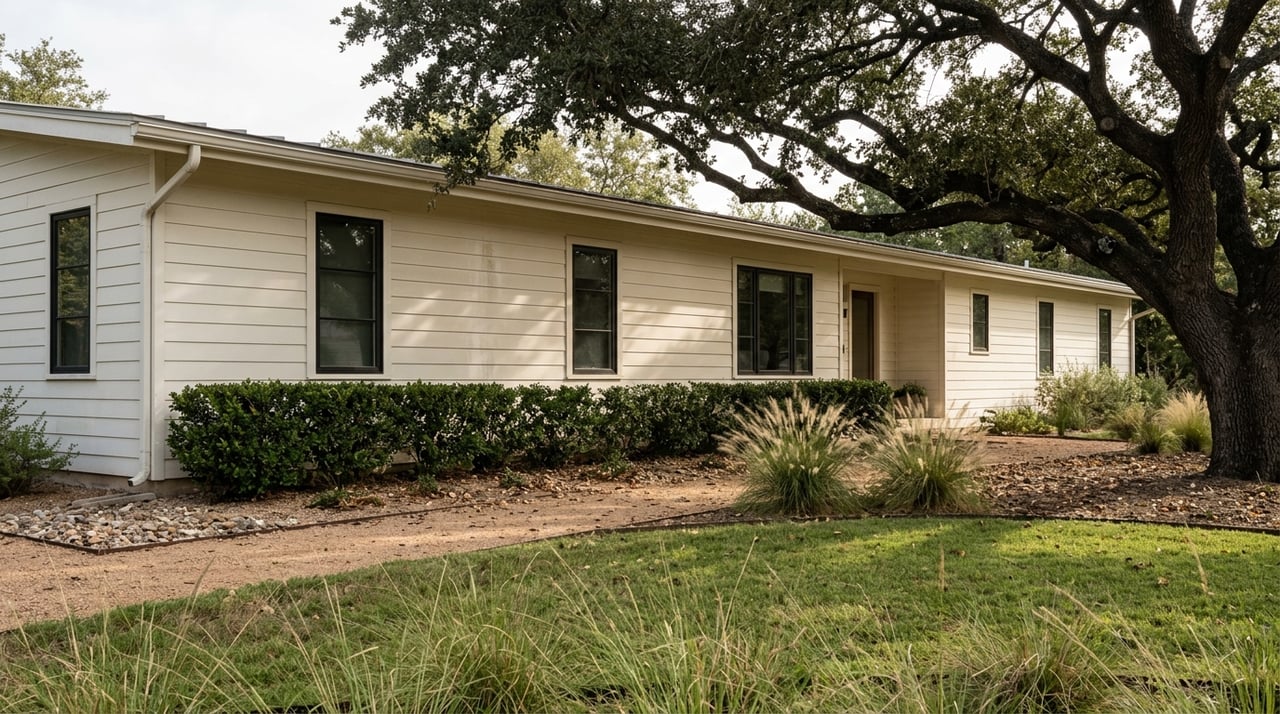
On the outskirts of the historic center, a modest supply of mid-century ranch-style homes from the 1950s through 1970s and a small number of post-2010 brick homes offer more conventional layouts with 3–4 bedrooms, attached garages, and updated utilities. These serve buyers who want to be close to town without the complexity of a historic restoration or acreage management.
Apartment living is essentially absent from Goliad's market. The rental supply is composed almost entirely of privately owned single-family homes. Buyers or renters looking for traditional multi-family options are better served by Victoria, roughly 25 minutes away.
Buying in Goliad requires a level of due diligence that goes beyond the standard suburban transaction. If the property falls within the Goliad Historic District, any significant exterior alterations or demolition must be approved by the Historic and Design Review Commission. That layer of oversight protects the neighborhood's integrity, but buyers should understand it before purchasing with renovation plans in mind.
Flood exposure is a meaningful concern along the San Antonio River and its tributaries, including Fannin Creek. Checking the FEMA Flood Insurance Rate Maps is non-negotiable before making an offer on any riverside or low-lying property. Zone A and AE designations carry mandatory flood insurance requirements that can add substantially to monthly carrying costs.
For acreage properties — which represent the most active segment of the market — buyers need to account for private water wells and septic systems rather than municipal utilities. Both require maintenance knowledge and budget that first-time rural buyers sometimes underestimate. Age of infrastructure matters too: homes from the late 1800s may have pier-and-beam foundation irregularities, outdated electrical systems including knob-and-tube wiring, and potential lead-based paint exposure. Standard home inspections are a starting point, not a finish line.
Finally, while Goliad ISD covers most of the county, buyers on the county's edges should confirm school district boundaries — some outer properties fall within Victoria or Beeville ISD instead.
Goliad's market rewards precision. Because comparable sales are sparse — particularly for unique ranch estates — overpricing is the most common and costly mistake sellers make. A professional appraisal before listing is worth the investment. Homes that are priced correctly from the start avoid the stigma of extended days on market that leads buyers to assume something is wrong with the property.
Seasonality in Goliad runs counterintuitively to the standard Texas real estate calendar. While most metro markets peak in spring, Goliad sees a distinct surge in late fall and winter driven by buyers seeking recreational and hunting land, as well as those who want to be settled before the annual "Christmas in Goliad" festivities bring visitors and community energy to the square.
Targeted improvements yield the best returns here. For historic homes, period-correct exterior paint colors and well-maintained porch presentation can measurably increase perceived value before a buyer ever steps inside. For ranch properties, clearing encroaching brush — mesquite and cedar are the primary offenders — to restore usable pasture or open river views addresses the first thing serious rural buyers assess. Energy efficiency upgrades, particularly HVAC systems and windows rated for South Texas heat, are another high-return investment given the climate.
Marketing should speak to the buyer demographics actually active in this market: retirees seeking a quieter pace, multi-generational families wanting land, and Houston or San Antonio weekenders looking for a second home with character. Urban commuter messaging will not resonate here.
Goliad's dining scene revolves around the Historic Courthouse Square, where local ownership and community reputation matter more than Yelp algorithms. The Blue Quail Deli is a town institution, known especially for its Cream of Poblano soup and fresh sandwiches that draw a loyal midday crowd. For a full-service Texas meal, the Hanging Tree Restaurant delivers steaks and comfort food with the kind of consistency that keeps locals coming back rather than driving to Victoria.
Tex-Mex is well represented by Empresario Restaurant and Sandra's Tex-Mex, both of which handle the traditional enchilada and breakfast taco format with genuine skill. Deborah's Kitchen Table leans into southwestern comfort classics — meatloaf, country fried chicken — with the feel of a Sunday dinner that you didn't have to cook. Mattie's Bakery & Cafe serves as the town's unofficial morning gathering place, combining homemade pastries, ice cream, and espresso in a setting that doubles as the closest thing Goliad has to a community bulletin board.
For drinks and nightlife, The Dawg House is the reliable local haunt — pool tables, darts, a jukebox, and weekend karaoke. Commercial Street Bar steps things up with a curated wine and craft beer selection in a restored historic space that draws a slightly more refined crowd. Goliad Brewing Company, located just outside the main town center, brings a large beer garden, brewery tours, and outdoor games that make it a genuine Saturday destination for families and groups alike.
Shopping in Goliad is deliberately small-scale and locally driven. The Historic Courthouse Square hosts a cluster of boutiques that reflect the town's personality: The Soul Emporium for gifts and unique goods, Glam Goliad for fashion and accessories, and Backwoods & Bling for that particular South Texas blend of rugged and stylish. Hanging Tree Antiques is a serious stop for collectors, stocking Texas-centric relics and vintage furniture that reward patience and a good eye. The Best Little Gun Shop in Texas — located just off the square — has built a genuine regional reputation among firearms enthusiasts and collectors.
For everyday needs, Lowe's Market serves as the primary full-service grocery store and functions as a genuine community anchor. Tractor Supply Co. handles the hardware, feed, and outdoor supply needs of the ranching community. Goliad Pharmacy & Gifts covers prescriptions and local gift items under one roof, which says something useful about how Goliad approaches efficiency.
The most significant shopping event is Goliad Market Days, held on the second Saturday of every month. With more than 100 vendors selling handcrafted jewelry, furniture, local honey, plants, and a rotating mix of goods, it's one of the largest open-air markets in South Texas and functions as much as a social event as a retail one. For residents, it's a recurring anchor on the calendar.
Goliad State Park & Historic Site is the centerpiece of outdoor recreation and one of the most complete state parks in South Texas. It offers shaded campsites, screened shelters, and the beautifully restored Mission Espíritu Santo — meaning a single visit can satisfy both a paddling trip and a history lesson. The park's floating dock is a reliable spot for sunfish, bass, and catfish, and the surrounding river bottom provides some of the best birding habitat in the region.
The Goliad Paddling Trail extends 6.6 miles along the San Antonio River, designated specifically for kayakers and canoeists who want to move through native wildlife corridors and steep, scenic riverbanks at their own pace. For those who prefer dry land, the Angel of Goliad Hike & Bike Trail connects the State Park to downtown and Presidio La Bahía along a 2.5-mile paved route ideal for morning runs and birding walks beneath old-growth oaks.
Branch River Park, near the town square, keeps things casual with a 9-hole disc golf course, a modern playground, and an amphitheater used for community programming. Goliad Public Golf Course offers a 9-hole layout with a relaxed, community-forward atmosphere for those who prefer their recreation with a cart. About 15 miles east, Coleto Creek Park & Reservoir expands the options considerably — powerboating, jet skiing, and swimming on a reservoir that draws visitors from across the Coastal Bend. For something entirely different, Shady Oaks Speedway hosts dirt track stock car racing nearby, rounding out a recreation portfolio that covers a surprisingly wide range of interests for a county of this size.
Goliad's culture is built on three reinforcing pillars: Spanish colonial heritage, Texian revolutionary memory, and the living tradition of South Texas ranching. None of these is a theme; all three are actively practiced.
Ranching isn't background scenery here — it's the community's organizing principle. Land management, livestock culture, and agricultural traditions shape how residents see themselves and how they socialize. The Goliad County Fair & PRCA Rodeo is one of the most important events on the annual calendar, featuring roping competitions, livestock shows, and everything that connects modern Goliad to its identity as the birthplace of Texas ranching.
History is treated as something to inhabit rather than observe. Every March, hundreds of reenactors converge on Presidio La Bahía to recreate the events of 1836, ending with a somber candlelight tour that carries genuine emotional weight in this community. Goliad is also the official Texas site for Cinco de Mayo celebrations, a distinction rooted in the fact that General Ignacio Zaragoza — the hero of the Battle of Puebla — was born here. The annual festival brings parades, live music, and food that reflect both the town's Mexican heritage and its Texas identity.
Day-to-day life runs on what locals call "Small Town Sunday" values — businesses close for church and family time, neighbors know each other by name, and civic engagement through historical preservation societies and Main Street programs is the norm rather than the exception. The nearby Schroeder Dance Hall, the second-oldest in Texas, remains a cultural institution where generations of locals gather to two-step to live country music. Market Days on the second Saturday of each month functions as the town's informal town hall — commerce and community happening simultaneously.
Goliad Independent School District serves approximately 1,300 students across three campuses and carries a generally above-average academic reputation. Goliad Elementary provides foundational instruction for roughly 550-plus students, Goliad Middle School transitions students into extracurriculars and elective programs, and Goliad High School caps the system with a graduation rate that runs consistently between 95% and 97%.
The high school's CTE (Career and Technical Education) programs are among its strongest assets, and the FFA chapter is particularly distinguished — a reflection of the community's deep agricultural roots. For families moving from suburban districts with large extracurricular menus, Goliad ISD offers a tight-knit environment where students are more visible, more known, and more connected to the fabric of the school than they might be in a 5A district.
Early childhood options include Upbring Head Start on W. High Street, the primary preschool and school readiness program in town. Private K-12 options are minimal within Goliad itself; families seeking parochial or college-preparatory alternatives typically look to Victoria, where Nazareth Academy and St. Joseph High School serve those needs.
For higher education, Victoria College, the University of Houston–Victoria, and Coastal Bend College in Beeville (about 30 miles west) collectively cover associate degrees, four-year programs, graduate education, and vocational certifications within a reasonable commute of Goliad.
Goliad is car-dependent by nature, and residents accept that as part of the trade-off for the lifestyle. The town sits at the intersection of U.S. Highway 59, which connects toward Houston to the northeast and Laredo to the southwest; U.S. Highway 183, which runs north toward Austin and south toward Refugio and Corpus Christi; and State Highway 239, providing a secondary coastal route. That convergence of major corridors makes Goliad far more connected than its population would suggest.
For those living and working within town, the average commute is 10–15 minutes. The most common regional commute is to Victoria — a 25–30 minute drive — where most of the area's healthcare, education, and professional employment is concentrated. San Antonio and Corpus Christi are both roughly 90 minutes away, accessible for day trips, specialist medical appointments, or airport travel.
RTransit operates a rural public transit program serving Goliad County, providing curb-to-curb shared van service primarily for seniors and residents without vehicles who need access to essential destinations. It fills a real gap for a population that skews older, but it is not a substitute for a personal vehicle for most daily needs.
The Historic Courthouse Square is walkable and pedestrian-friendly — the three-block radius of downtown can be navigated entirely on foot. Beyond that perimeter, a vehicle is essential.
Market Street and St. James Street anchor the Historic Courthouse Square district and offer proximity to the town's dining, shopping, and cultural activity. Properties here are typically Victorian-era homes or renovated commercial buildings that reflect Goliad's peak architectural period.
San Antonio River Road and River Bottom Road are the addresses for buyers seeking riverfront acreage with live oaks, wildlife, and access to the paddling trail. Privacy and natural scenery come standard on these routes.
Highway 183 North corridor offers larger acreage tracts with strong highway access for those who need connectivity without sacrificing land. Properties here are well-suited for buyers combining recreational use with working agricultural operations.
W. End St. and Fannin St. represent the quieter residential fabric of the historic core — streets where mid-century homes and early-20th century residences coexist in an established, shaded neighborhood setting that feels genuinely rooted.
People love Goliad because it refuses to become something it isn't. In an era when small towns across Texas are either disappearing or reinventing themselves as commuter suburbs, Goliad has held its identity with remarkable stubbornness. The same courthouse has stood at the center of town for over 130 years. The same river that fed the Spanish missions still draws kayakers and fishermen on Saturday mornings. The same rodeo traditions that connect this county to its ranching heritage still fill the grandstands every fall.
What draws people here — retirees, weekenders, history-minded buyers, families with agricultural roots — is the sense that Goliad is a place with a past worth preserving and a pace worth protecting. You don't move here to get somewhere. You move here because this is where you want to be.
There's plenty to do around Goliad, including shopping, dining, nightlife, parks, and more. Data provided by Walk Score and Yelp.
Explore popular things to do in the area, including K's Kitchen, Tokie’s Taco’s & More, and Dollar General.
| Name | Category | Distance | Reviews |
Ratings by
Yelp
|
|---|---|---|---|---|
| Dining | 0.01 miles | 0 reviews | 0/5 stars | |
| Dining | 0.01 miles | 0 reviews | 0/5 stars | |
| Dining | 0.17 miles | 1 review | 5/5 stars | |
| Dining · $ | 0.19 miles | 65 reviews | 3/5 stars | |
| Dining | 0.19 miles | 0 reviews | 0/5 stars | |
| Dining | 0.2 miles | 0 reviews | 0/5 stars | |
| Dining · $ | 0.22 miles | 38 reviews | 1.9/5 stars | |
| Dining · $ | 0.23 miles | 11 reviews | 3/5 stars | |
| Dining | 0.25 miles | 1 review | 3/5 stars | |
| Dining · $ | 0.25 miles | 5 reviews | 3/5 stars | |
| Dining | 0.25 miles | 3 reviews | 1.3/5 stars | |
| Dining | 0.27 miles | 0 reviews | 0/5 stars | |
| Dining | 0.28 miles | 0 reviews | 0/5 stars | |
| Dining | 0.3 miles | 1 review | 1/5 stars | |
| Dining · $ | 0.31 miles | 52 reviews | 4.3/5 stars | |
| Dining | 0.31 miles | 0 reviews | 0/5 stars | |
| Shopping | 0.21 miles | 0 reviews | 0/5 stars | |
| Active | 0.19 miles | 2 reviews | 5/5 stars | |
| Active | 0.23 miles | 0 reviews | 0/5 stars | |
| Active | 0.27 miles | 0 reviews | 0/5 stars | |
| Active | 0.29 miles | 0 reviews | 0/5 stars | |
| Beauty | 0.01 miles | 0 reviews | 0/5 stars | |
| Beauty | 0.3 miles | 1 review | 5/5 stars | |
|
|
||||
|
|
||||
|
|
||||
|
|
||||
|
|
||||
|
|
Goliad has 646 households, with an average household size of 2.26. Data provided by the U.S. Census Bureau. Here’s what the people living in Goliad do for work — and how long it takes them to get there. Data provided by the U.S. Census Bureau. 1,551 people call Goliad home. The population density is 991 and the largest age group is Data provided by the U.S. Census Bureau.
Total Population
Population Density Population Density This is the number of people per square mile in a neighborhood.
Median Age
Men vs Women
Population by Age Group
0-9 Years
10-17 Years
18-24 Years
25-64 Years
65-74 Years
75+ Years
Education Level
Total Households
Average Household Size
Average individual Income
Households with Children
With Children:
Without Children:
Marital Status
Blue vs White Collar Workers
Blue Collar:
White Collar: